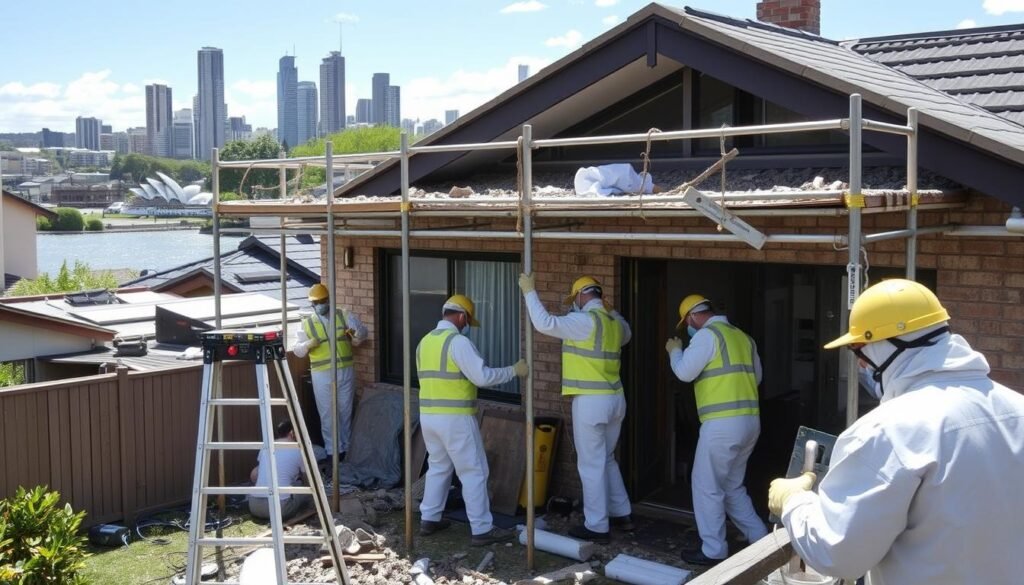
TLDR: NSW Double Wrapping Requirements Explained
In NSW, asbestos waste must be double-bagged in 0.2mm thick polyethylene bags, sealed with duct tape, clearly labeled with asbestos warning signs, and kept wet during the entire wrapping process. The double wrapping requirements for asbestos disposal in NSW are specifically outlined in SafeWork NSW’s Code of Practice and the Work Health and Safety Regulation 2017. Each bag must be individually sealed before placing inside the second bag, and all bags must display the required asbestos warning labels showing the type of asbestos and date of removal.
I’ve supervised over 800 asbestos removal projects across Sydney in the past decade, and I can tell you that improper wrapping is one of the most common violations I see—and one of the most dangerous. This guide will walk you through exactly what NSW law requires, why it matters, and how to do it correctly every single time.
Why Double Wrapping Isn’t Just a Suggestion
Let me start with a story that shows why these rules exist.
In February 2026, I consulted on a property in Petersham where a homeowner had hired an unlicensed contractor for “cheap asbestos removal Sydney.” The contractor used single garbage bags, didn’t keep the material wet, and stacked everything in the driveway. When the legitimate asbestos removalist Sydney team arrived for proper disposal, one of those bags had torn during handling. Asbestos fibres had contaminated a 15-meter radius of the property.
The cleanup cost? $28,000. The original “savings” from the cheap contractor? About $1,200. That’s a 23x multiplier on false economy.
But the financial cost wasn’t even the worst part. Three neighboring properties needed air monitoring. The homeowner faced SafeWork NSW penalties totaling $6,500. And the psychological stress of wondering whether anyone—family, neighbors, contractors—had been exposed? That lasted months.
Double wrapping requirements exist because asbestos kills. There’s no safe level of exposure, and fibres remain dangerous for decades. Proper containment from the moment of removal until final disposal is the only way to prevent exposure.
The Legal Framework: What NSW Law Actually Says
The double wrapping requirements for asbestos disposal in NSW come from three main regulatory sources:
SafeWork NSW Code of Practice
The “How to Safely Remove Asbestos Code of Practice” (updated January 2025, current through 2026) specifies that all asbestos waste must be:
- Sealed in leak-proof containers or bags
- Double-wrapped for friable asbestos
- Double-wrapped for damaged or deteriorated non-friable asbestos
- Kept wet throughout the wrapping process
- Labeled with asbestos warning signs
- Transported in covered vehicles
Work Health and Safety Regulation 2017
Section 470 mandates that asbestos must be “transported, stored and disposed of in a manner that minimizes the risk of exposure.”
This includes specific requirements for:
- Container specifications
- Labeling standards
- Transport procedures
- Waste tracking documentation
Protection of the Environment Operations Act 1997
This NSW EPA regulation governs the actual disposal, requiring:
- Tracking from point of removal to final disposal
- Licensed facility acceptance
- Chain of custody documentation
- Waste classification records
Breaking these rules isn’t just dangerous—it’s illegal. In 2026, SafeWork NSW can issue on-the-spot fines up to $7,200 for individuals and $36,000 for companies for improper asbestos handling.
Step-by-Step Double Wrapping Process
Here’s exactly how proper double wrapping must be done according to NSW requirements:
Step 1: Material Preparation
Before any bagging happens:
Keep it wet: Spray asbestos material with water mixed with a wetting agent (like dishwashing liquid, roughly 1:100 ratio). The material should be thoroughly saturated but not dripping excessively.
Work in manageable sections: Don’t remove and pile material. Wrap as you go. For fibro sheeting, this typically means one or two sheets at a time.
Have all supplies ready:
- 0.2mm (200 micron) thick polyethylene bags
- Duct tape or similar sealing tape
- Asbestos warning labels
- Permanent markers
- Spray bottles with wetting solution
- Disposal tracking forms
I remember working with a first-time renovator in Marrickville in March 2026 who tried to wet everything at once, then bag later. By the time he got to the last pile, the material had dried out and fibres were becoming airborne. We had to stop work, re-wet everything, and start over. The lesson? Wet it, wrap it, seal it—immediately.
Step 2: First Layer Bagging
Choose appropriate bag size: Standard practice in Sydney:
- Small debris (less than 10kg): 60-70L bags
- Fibro sheets: 150-180L bags or specialized asbestos disposal bags
- Larger pieces: May need custom bags or wrapping in 0.2mm sheeting
Place material carefully: Don’t drop or throw asbestos into bags. This can create dust and damage the bag. Slide sheets in gently, ensuring wet material doesn’t puncture the bag.
Fill to safe capacity: Never overfill. Bags should be no more than two-thirds full to allow for proper sealing. An overfilled bag is more likely to tear during handling or transport.
Seal the first bag:
- Remove excess air carefully (don’t compress too hard)
- Twist the top of the bag several times
- Fold the twisted portion down
- Seal with duct tape, wrapping around at least twice
- Ensure the seal is completely airtight
Step 3: Second Layer Bagging (The “Double Wrap”)
This is where many people get it wrong. The second bag isn’t just backup—it’s a completely separate containment system.
Prepare the outer bag: Open a second bag of the same size and thickness (0.2mm minimum) as the first.
Place sealed first bag inside: Carefully place the sealed first bag into the second bag. The first bag should be completely enclosed.
Seal the outer bag: Use exactly the same sealing procedure as the first bag:
- Remove air
- Twist top
- Fold and seal with duct tape
- Ensure complete seal
Why this matters: If the outer bag tears during transport, the inner bag provides complete containment. If the inner bag has a microscopic leak, the outer bag captures any fibres. It’s a redundant safety system.
Step 4: Labeling Requirements
Every double-wrapped package must display clearly visible asbestos warning labels. NSW regulations require:
Label content must include:
- The word “ASBESTOS” or “CONTAINS ASBESTOS”
- The asbestos type (e.g., “Bonded non-friable asbestos”)
- Date of removal
- Site address (for tracking)
- Warning symbol (white text on red background)
Label placement:
- Minimum one label per bag on the most visible side
- For larger bags, labels on multiple sides
- Labels must remain legible and attached
Label size: Minimum 100mm x 100mm for small bags, larger for bags over 100L
I’ve seen cases where homeowners used handwritten labels that smeared in wet conditions. SafeWork NSW inspectors can (and do) reject improperly labeled waste at disposal facilities. Use proper waterproof asbestos labels—they cost about $2 each and eliminate compliance issues.
When Is Double Wrapping Required vs. Single Wrapping?
Not all asbestos waste requires double wrapping. Here’s the breakdown:
Double Wrapping Is Mandatory For:
Friable asbestos (always):
- Loose asbestos insulation
- Asbestos pipe lagging
- Sprayed asbestos coatings
- Any asbestos that can be crumbled by hand
Damaged or deteriorated non-friable asbestos:
- Broken fibro sheets
- Water-damaged asbestos cement
- Weathered or crumbling asbestos products
- Any non-friable material showing surface breakdown
Dust and debris from asbestos removal:
- Sweepings from removal areas
- Vacuum waste (including HEPA filter contents)
- Cleaning cloths and contaminated PPE
- Any small particles or dust
Single Wrapping May Be Acceptable For:
Intact non-friable asbestos in good condition:
- Whole, undamaged fibro sheets
- Solid asbestos cement products
- Materials not showing deterioration
HOWEVER: Even for intact non-friable asbestos, most licensed asbestos removal companies Sydney use double wrapping as standard practice. Why? Because:
- Handling during transport can cause damage
- It provides extra protection if bags are stacked
- It eliminates any question of compliance
- The additional cost is minimal (about $2-3 per package)
At X-Asbestos Removalist Sydney, we double-wrap everything regardless of material condition. It’s simply best practice, and it removes any compliance ambiguity.
Common Double Wrapping Mistakes to Avoid
After a decade in asbestos removal Sydney, I’ve seen every mistake imaginable. Here are the ones that create real safety risks:
Mistake 1: Using Wrong Bag Thickness
The error: Using standard garbage bags (typically 0.03-0.05mm) instead of proper 0.2mm asbestos disposal bags.
Why it’s dangerous: Thin bags puncture easily, especially with sharp fibro edges. I’ve seen entire loads rejected at disposal facilities because bags didn’t meet thickness requirements.
The fix: Only use bags specifically rated for asbestos disposal at 0.2mm (200 micron) minimum thickness. Yes, they cost more ($3-5 per bag vs. $0.50 for garbage bags), but they’re the only legal option.
Mistake 2: Dry Wrapping
The error: Bagging asbestos without keeping it wet throughout the process.
Why it’s dangerous: Dry asbestos releases fibres into the air during handling. Those fibres can escape when you open bags, during sealing, and if bags have any microscopic gaps.
The fix: Spray material immediately before bagging. Keep a spray bottle handy during the wrapping process. Material should remain visibly damp throughout.
Mistake 3: Inadequate Sealing
The error: Loosely tying bag tops or using a single wrap of tape.
Why it’s dangerous: Inadequate seals allow fibre escape, especially during transport vibration or if bags shift and twist.
The fix: Use the twist-fold-tape method described earlier. Tape should wrap around at least twice, creating a completely airtight seal. Test by gently trying to pull the seal apart—it should be completely rigid.
Mistake 4: Overfilling Bags
The error: Cramming as much material as possible into each bag to reduce bag count.
Why it’s dangerous: Overfilled bags can’t be properly sealed. They’re also more likely to tear during lifting and transport. Sharp fibro edges under pressure can puncture even thick bags.
The fix: Fill bags to about two-thirds capacity maximum. Leave enough room to seal properly. The cost of a few extra bags (maybe $10-15) is insignificant compared to the risk.
Mistake 5: Reusing Damaged Bags
The error: Trying to tape up a torn bag or reuse bags from previous projects.
Why it’s dangerous: Once a bag is compromised, it can’t provide reliable containment. Tape doesn’t create an equivalent seal over torn plastic.
The fix: Any damaged bag goes straight into another fresh bag. Treat it as contaminated waste and double-wrap it. Never try to repair or reuse asbestos disposal bags.
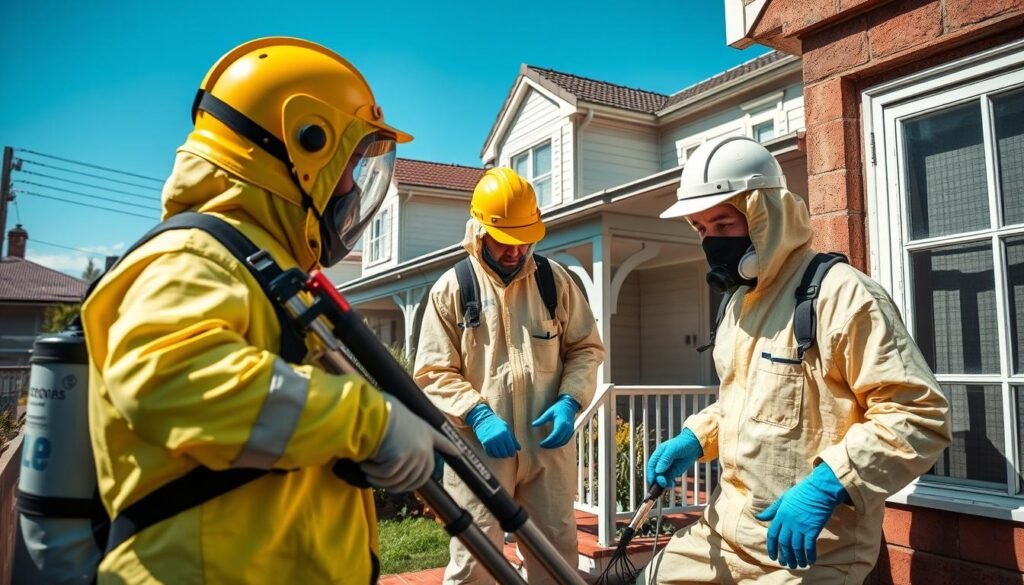
What Type of Bags Meet NSW Requirements?
This is one of the most common questions from Sydney homeowners planning DIY small-scale removal.
Bag Specifications Required by NSW Law
Thickness: Minimum 0.2mm (200 micron)
Material: Heavy-duty polyethylene (PE) or similar impermeable plastic
Seam strength: Must withstand normal handling without splitting
Size options commonly used:
- 60-70L for small debris
- 120L for moderate amounts
- 150-180L for fibro sheets (most common in Sydney residential work)
- Custom sizes for large projects
Where to Purchase Compliant Bags in Sydney
Specialized safety suppliers: Companies like Protector Safety Supply, Safe N Sound, and others stock asbestos-rated bags. Expect to pay $3-6 per bag depending on size.
Trade suppliers: Some plumbing and building suppliers stock asbestos bags, though selection may be limited.
Through licensed removalists: When you engage an asbestos removal company Sydney like X-Asbestos Removalist Sydney, all compliant bags and materials are included in the service.
What to avoid: General hardware stores often don’t stock true 0.2mm asbestos disposal bags. Don’t substitute heavy-duty garbage bags—they’re not equivalent.
How to Verify Bag Compliance
Check for:
- Printed thickness specification on the bag or packaging
- “Asbestos disposal” or “asbestos waste” designation
- Australian Standard reference (AS 4964-2004 covers asbestos removal)
- Supplier documentation confirming specifications
If you’re uncertain, ask your supplier for written confirmation that bags meet NSW requirements. A licensed asbestos removalist Sydney will only use compliant bags as standard.
The Complete Packaging Process for Different Materials
Different types of asbestos require slightly different approaches. Here’s how proper double wrapping works for common Sydney materials:
Fibro Sheeting (Most Common in Sydney)
Fibro was extensively used in Sydney homes from 1940-1987, especially in suburbs like Marrickville, Leichhardt, Ashfield, and throughout the Inner West.
Preparation:
- Spray sheets thoroughly with wetting solution
- Handle carefully to avoid breaking (creates dust)
- Keep flat if possible to prevent bending and cracking
First bag:
- Use 150-180L heavy-duty asbestos bags
- Slide sheet in carefully—don’t force or fold unless unavoidable
- For full sheets (2.4m x 1.2m), you may need to carefully fold once
- Seal immediately after inserting sheet
Second bag:
- Place sealed first bag into second 150-180L bag
- Ensure no sharp edges are pressing against outer bag
- Seal completely
Typical result: A full fibro sheet properly double-wrapped weighs 15-25kg depending on thickness. This is manageable for two-person lifting but awkward for one person.
Asbestos Roof Material
Sydney homes often have corrugated asbestos cement roofing, particularly in Western suburbs.
Special considerations:
- Roof sheets are larger and heavier than wall fibro
- Corrugations create puncture risk
- Material is often more weathered and brittle
Packaging approach:
- Use largest available bags (180L+) or custom-cut 0.2mm sheeting
- May need to break sheets into manageable sections (done wet, carefully)
- Wrap sharp edges with additional material before bagging
- Double-wrap as standard
Asbestos Pipe Insulation (Friable)
This is high-risk material requiring Class A licensed asbestos removalist Sydney contractors. Homeowners legally cannot remove friable asbestos themselves.
Process (for licensed professionals):
- Full containment and wet methods during removal
- Immediate bagging as removed—don’t accumulate material
- Smaller bags (60-70L) for easier handling
- Multiple layers of wrapping may be used
- Continuous air monitoring during packaging
Debris and Dust
The small stuff is actually the most dangerous because it’s most easily airborne.
Collection:
- Use HEPA-filtered vacuum for final cleanup
- Wet-wipe surfaces to capture remaining dust
- Treat all cleaning materials as asbestos waste
Packaging:
- Small debris bags (60L) work well
- Include vacuum contents, filters, cleaning cloths, and disposable PPE
- Double-wrap all debris bags
- Seal very carefully since material is finer and more likely to leak
Transport Requirements After Double Wrapping
Proper wrapping is only part of the equation. NSW law also specifies how wrapped asbestos must be transported.
Vehicle Requirements
Covered transport: Wrapped asbestos must be transported in:
- Enclosed vehicles (vans, covered trucks)
- Open vehicles with secure tarps or covers
- Containers that prevent bags from falling or blowing out
Securing loads:
- Bags must be secured to prevent shifting during transport
- Don’t stack so high that bags could fall
- Heavier bags on bottom, lighter on top
- Use straps or barriers to contain load
Transport Documentation
NSW requires tracking documentation including:
Waste consignment note: Details including:
- Waste generator (property owner or contractor)
- Transport details (vehicle, driver, date)
- Waste description (type and quantity of asbestos)
- Destination facility
- Tracking number
Chain of custody: Each person handling the waste must sign documentation. This creates a complete record from removal site to disposal facility.
I worked on a Dulwich Hill project in April 2026 where the disposal facility rejected a load because the consignment note was incomplete. The entire load—properly wrapped, properly loaded—had to return to site, paperwork had to be corrected, and disposal was delayed three days. The lesson? Documentation is as important as physical compliance.
Distance and Time Considerations
Direct transport: NSW regulations require asbestos waste to be transported directly from removal site to disposal facility. No stopping at other locations, no overnight storage in vehicles.
Sydney disposal facilities: Major facilities include:
- Bingo Industries (multiple Sydney locations)
- Suez Kemps Creek
- Cleanaway facilities
Most Sydney properties are within 30-45 minutes of an approved facility. The asbestos removal cost NSW typically includes transport and disposal fees, which range from $200-400 per tonne depending on facility and volume.
What Happens During Transport Inspection
SafeWork NSW and EPA inspectors can stop vehicles transporting asbestos. They check:
- Vehicle has required covers/containment
- Bags meet thickness and sealing requirements
- Labels are visible and compliant
- Documentation is complete and accurate
- Driver has required licenses (if commercial transport)
Non-compliance can result in on-the-spot fines and orders to immediately correct issues before continuing transport.
Disposal Facility Requirements
Even with perfect double wrapping, your waste can still be rejected at disposal facilities if other requirements aren’t met.
What Facilities Check on Arrival
Bag inspection:
- Thickness verification (facilities sometimes measure)
- Seal integrity
- Label compliance
- No visible tears or leaks
Documentation:
- Complete waste consignment notes
- Correct waste classification
- Generator and transporter details
Load condition:
- Material is wet
- Bags aren’t broken from transport
- Load matches documentation
Rejection Scenarios I’ve Witnessed
Case 1 – Streaky Bay facility, January 2026: Load rejected because bags weren’t labeled with removal date. Contractor had to return to site, relabel every bag with correct dates, return to facility. Cost: 6 hours and $400 in additional fuel and labor.
Case 2 – Kemps Creek, March 2026: Facility rejected load because outer bags had tears from transport. Material needed re-wrapping on site in facility’s designated area before acceptance. Additional cost: $280 for re-bagging and extended facility time.
Case 3 – Rockdale property, February 2026: DIY homeowner used 0.1mm bags (too thin). Facility rejected entire load. Homeowner had to hire licensed asbestos removalist to collect, re-wrap, and properly dispose. Total cost: $2,100 vs. the original $400 disposal fee.
Disposal Costs in Sydney (2026)
Proper disposal through licensed facilities costs:
Residential quantities:
- Minimum fee: $180-250 (typically covers up to 250kg)
- Per tonne over minimum: $200-350 depending on facility
- Average Sydney small project (fibro bathroom): $200-400 disposal cost
Commercial/large projects:
- Negotiated rates for large volumes
- May include bin hire for on-site accumulation
- Typically $180-280 per tonne
These costs are in addition to the asbestos removal Sydney cost for labor, which for licensed removalists ranges from $80-150 per square meter depending on material type and access.
How X-Asbestos Removalist Sydney Handles Double Wrapping
When you work with professional licensed asbestos removalist Sydney contractors, the double wrapping process is part of the standard service. Here’s what that looks like:
Compliant Materials as Standard
X-Asbestos Removalist Sydney uses only certified 0.2mm asbestos disposal bags from approved suppliers. Every bag is verified for compliance before arriving at your site. You don’t need to source materials or worry about specifications—it’s all handled.
Continuous Wet Methods
Throughout removal and wrapping, trained technicians maintain wet conditions using:
- Professional spray equipment with wetting agents
- Continuous monitoring of material moisture
- Re-wetting as needed during the packaging process
This is more sophisticated than a homeowner with a spray bottle. Professional equipment ensures consistent, thorough wetting that minimizes any possible fibre release.
Systematic Packaging Approach
The process follows strict protocols:
- Remove section of material (keeping wet)
- Immediately bag in first 0.2mm bag
- Seal first bag completely
- Place in second bag and seal
- Label immediately with all required information
- Stage in designated area for transport
- Document each package on tracking sheets
This systematic approach means nothing sits exposed, nothing dries out, and nothing gets rushed.
Included Documentation
All required documentation is prepared and managed:
- Waste consignment notes
- Chain of custody records
- Disposal facility receipts
- Certificate of disposal for your records
For property transactions, renovations requiring council approval, or insurance purposes, having complete professional documentation is invaluable. I’ve seen property sales delayed because sellers couldn’t provide proof of proper asbestos disposal from years earlier.
Transport and Disposal Included
The service includes:
- Covered transport vehicles meeting NSW requirements
- Direct transport to licensed disposal facilities
- All disposal facility fees
- Facility acceptance documentation
You don’t need to worry about trailer rental, facility access, or whether your vehicle is compliant. It’s a complete service from removal through final disposal.
Compliance Guarantee
Professional removalists carry full licensing and insurance specifically for asbestos work. If any compliance issues arise (extremely rare with experienced contractors), they’re the removalist’s responsibility to resolve, not yours.
Compare this to DIY or unlicensed contractors: if anything goes wrong, you as the property owner bear the legal liability and financial cost.
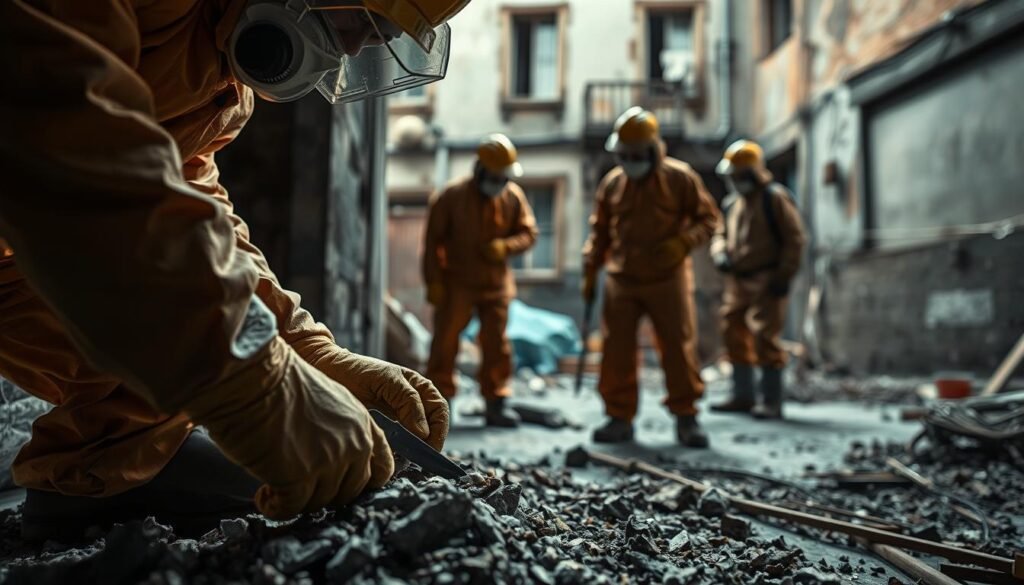
DIY Double Wrapping: Can Homeowners Do It Legally?
This is a nuanced question, and the answer depends on specific circumstances.
What NSW Law Allows for Homeowners
Under NSW regulations, homeowners can legally remove and dispose of:
Up to 10 square meters of non-friable (bonded) asbestos from their own residence without a license, provided:
- Material is in good condition (not broken or deteriorated)
- It’s not friable asbestos (homeowners can NEVER remove friable)
- Proper safety procedures are followed
- Correct disposal methods are used
This might cover:
- A few sheets of fibro from a small bathroom or laundry
- A section of fibro fence
- Small area of eaves or external cladding
DIY Double Wrapping Requirements
If you’re doing legal DIY removal within the 10 square meter limit, you must still follow all double wrapping requirements:
- 0.2mm polyethylene bags (both layers)
- Wet methods throughout
- Proper sealing of both bags
- Correct labeling
- Transport in covered vehicle
- Disposal at licensed facility with documentation
The reality check: Doing this properly requires purchasing specialized bags, proper PPE (P2 respirator minimum, disposable coveralls, gloves), wetting equipment, and having transport. The cost of materials alone is often $150-300.
Meanwhile, a licensed asbestos removalist Sydney contractor might charge $400-600 for the same small job, including:
- Professional safety equipment
- Proper removal techniques
- Compliant double wrapping
- Transport and disposal
- Documentation and certificates
- Full insurance and liability coverage
The cost difference is small, but the risk difference is enormous.
When DIY Is Never Appropriate
Never attempt DIY removal if:
- Material is friable (crumbly, loose, or can be crumbled by hand)
- Material is broken, damaged, or deteriorated
- Area exceeds 10 square meters
- Asbestos is in hard-to-reach locations (roof work especially)
- You have any respiratory conditions
- Material type is unknown (always test first)
- Property is rental or commercial (owner-occupier only for DIY)
In these situations, it’s not just inadvisable—it’s illegal for unlicensed individuals to remove asbestos. Only Class A or Class B licensed contractors can legally perform the work.
Double Wrapping Inspection and Compliance Checks
SafeWork NSW conducts regular inspections and responds to complaints about improper asbestos handling. Here’s what you need to know:
What Triggers an Inspection
Complaints: If neighbors report improper handling, expect an inspector Random audits: Disposal facilities are routinely checked Incident investigations: Any asbestos exposure incident triggers investigation License compliance: Licensed removalists are regularly audited
What Inspectors Check
During site visits or facility inspections, SafeWork NSW looks for:
Bag compliance:
- Correct thickness (they sometimes measure)
- Double wrapping where required
- Proper sealing
- No visible damage or leaks
Labeling compliance:
- All required information present
- Labels properly attached and legible
- Correct asbestos type identified
Wet methods:
- Material is visibly damp
- Wetting equipment present and used
- No dry dust visible
Documentation:
- Complete waste tracking
- Proper notifications filed
- Licensed contractor credentials (if applicable)
Penalties for Non-Compliance
2026 penalties for improper asbestos handling in NSW:
Individuals:
- Improper wrapping/disposal: $3,600-$7,200 on-the-spot fine
- Unlicensed removal: up to $60,000 court-imposed penalty
- Serious breaches: potential criminal charges
Companies:
- Improper handling: $18,000-$36,000 on-the-spot fine
- Unlicensed work: up to $300,000 court-imposed penalty
- Repeat violations: license suspension or cancellation
I consulted on a case in Homebush in May 2026 where a property flipper hired an unlicensed contractor who single-bagged asbestos and dumped it in a regular waste bin. A council inspector noticed the distinctive fibro sheets during a routine check. The property owner received a $6,500 fine, was ordered to pay for proper disposal ($3,200), and faced delays selling the property while remediation was completed. The unlicensed contractor faced court action with penalties exceeding $40,000.
Frequently Asked Questions About Double Wrapping
Can I use regular heavy-duty garbage bags?
No. Even “heavy-duty” garbage bags are typically only 0.05-0.08mm thick—well below the required 0.2mm standard. They also lack the necessary puncture resistance. You must use bags specifically rated for asbestos disposal.
What if I can’t find 0.2mm bags locally?
Licensed asbestos removal companies Sydney always have compliant bags in stock. If you’re doing legal DIY removal and struggling to source bags, consider purchasing through a professional safety supplier online, or alternatively, engage a licensed contractor who will handle all materials and disposal.
Do both bags need labels or just the outer one?
Best practice is to label the outer bag only (since that’s what’s visible). However, labeling both bags provides extra protection if bags need to be separated during handling. Professional removalists typically label outer bags only.
How long can wrapped asbestos be stored before disposal?
NSW regulations require transport “as soon as practicable” to disposal facilities. For practical purposes:
- Residential DIY: same day or next day
- Licensed contractors: typically same day, never more than a few days
- Long-term storage requires special approval and facility
Never store wrapped asbestos indefinitely on residential properties. Disposal should be immediate.
What happens if a bag tears during handling?
Stop immediately. Wet the area thoroughly. Place the torn bag (carefully) into a fresh bag, seal it, then place that in another bag. You’ve now essentially triple-wrapped it. If tearing occurred due to overfilling or sharp edges, adjust your approach for remaining material.
Can I dispose of double-wrapped asbestos in my regular bin?
Absolutely not. Asbestos must go to licensed asbestos disposal facilities. Placing it in regular waste is illegal and extremely dangerous. Waste workers, facility operators, and the public could be exposed. This violation carries serious penalties.
The Real Cost of Cutting Corners on Wrapping
I want to close with a broader perspective on why these requirements matter—and what happens when people try to save money by cutting corners.
In late 2025, I was called to assess a property in Summer Hill where the owner had hired someone advertising “cheap asbestos removalist Sydney” services on Facebook. The “contractor” (unlicensed) had:
- Single-bagged asbestos in thin garbage bags
- Left bags unsealed in the backyard for three weeks
- Loaded bags into an uncovered trailer
- Attempted to dump at a regular waste transfer station (rejected)
- Abandoned the bags back at the property
When I arrived, several bags had torn open. Fibro pieces and dust were scattered across the yard. The property required:
- Professional containment and cleanup
- Soil testing in exposed areas
- Re-bagging of all material
- Proper disposal
- Air monitoring clearance
Total remediation cost: $18,500. The owner had paid the unlicensed contractor $800, thinking they were saving money compared to the $2,400 quote from legitimate licensed asbestos removalist Sydney companies.
That’s a 23x cost multiplier for cutting corners. And that doesn’t count the stress, the time delays, the neighbor relations damage, or the potential health exposure.
Proper double wrapping isn’t expensive when done right the first time. The bags cost a few dollars each. The additional time to wrap correctly adds maybe 10-15 minutes per bag. For professional contractors, it’s built into the standard process.
But doing it wrong? That’s where costs explode.
Double Wrapping as Part of the Complete Safety System
It’s important to understand that double wrapping isn’t a standalone safety measure—it’s one component of a complete asbestos safety system:
Before removal:
- Testing to confirm asbestos presence and type
- Risk assessment and removal planning
- Proper notifications to authorities and neighbors
- Containment area setup
During removal:
- Wet methods to suppress dust
- Proper PPE for all workers
- Negative air pressure containment (for friable asbestos)
- Careful handling to minimize damage
Packaging stage:
- Continuous wet methods
- Proper double wrapping
- Correct labeling
- Systematic staging
Transport:
- Covered vehicles
- Secure loading
- Complete documentation
- Direct route to facility
Disposal:
- Licensed facility acceptance
- Proper landfill procedures
- Final documentation
- Certificate of disposal
After removal:
- Site cleanup and decontamination
- Visual inspection
- Air monitoring (when required)
- Clearance certification
When you engage a professional like X-Asbestos Removalist Sydney, you get the entire system working together. Double wrapping is important, but it’s most effective as part of comprehensive professional practice.
Related Blogs
- Do I need to notify neighbours before removing asbestos in NSW?
- Can I get fined for removing more than 10 square metres of asbestos myself in NSW?
- Do I need to tell my insurance company about asbestos removal?
About the Author
Daniel
Asbestos Removal Consultant & Customer Experience Manager
10+ years of industry experience · Sydney-based
Daniel helps homeowners, businesses, strata managers, and property professionals choose suitable asbestos removal solutions. He specializes in explaining removal options, safety requirements, project planning, and scheduling in clear, practical terms.
Daniel also contributes to X-Asbestos Removalist Sydney’s service guides, suburb pages, and asbestos safety content. He has directly supervised or consulted on over 800 asbestos removal projects across Sydney, with particular expertise in Inner West fibro homes and residential renovation projects. His focus is on translating complex regulatory requirements into practical guidance that keeps Sydney homeowners safe and compliant.